THE SUPREME COURT AND THE INSTITUTION OF CHIEFTAINCY
Past, Present and the Future
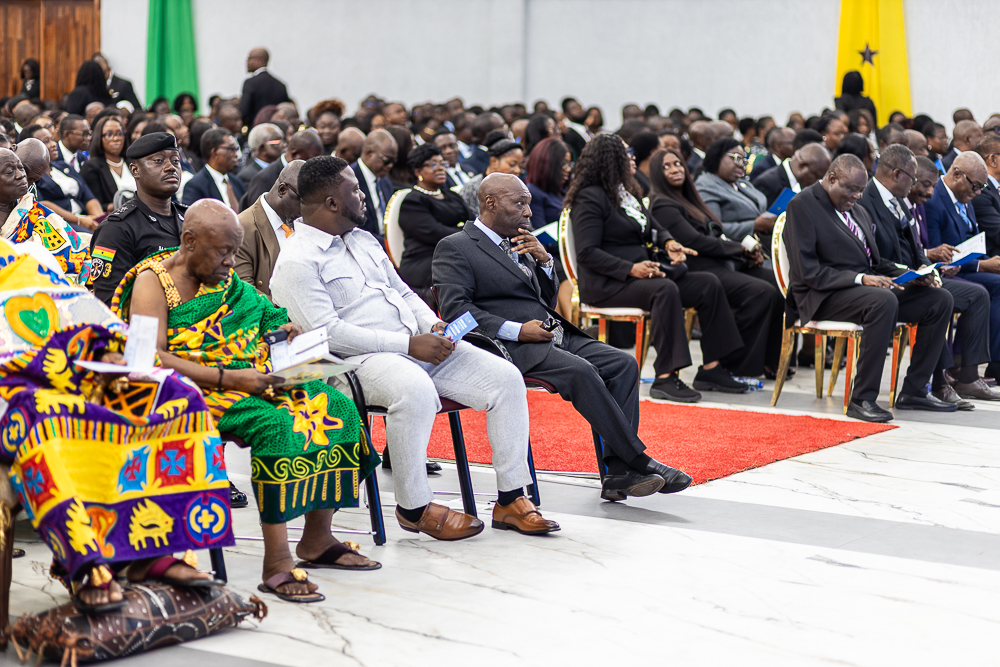
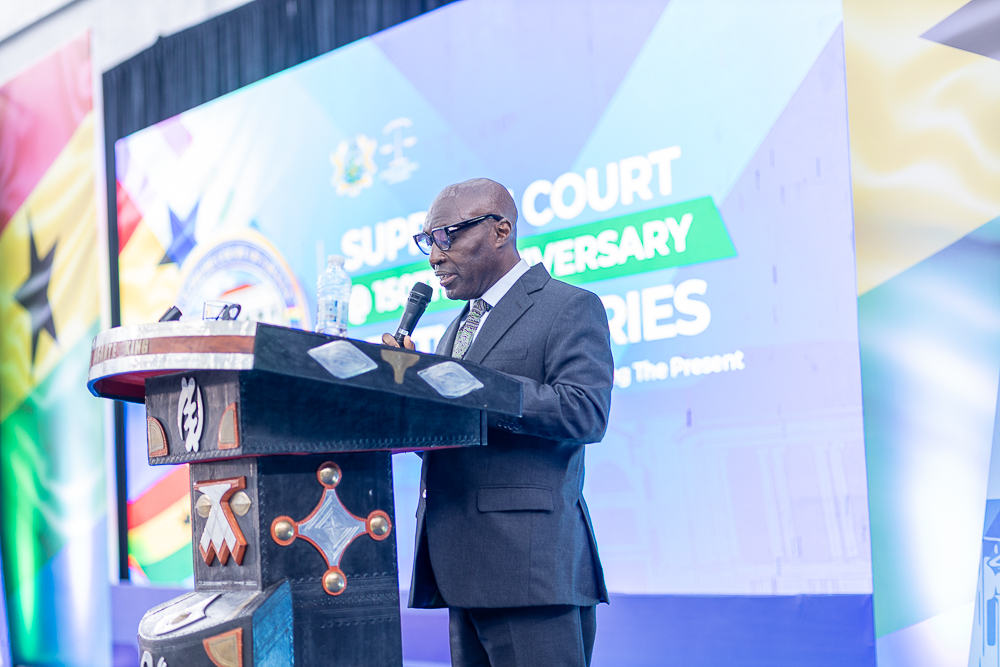
The matter with keynote addresses or lectures is that you don’t get to be asked questions. In rare cases when questions are asked, there are outlets for escape. Not being a lawyer, an academic in the discipline or a jurist, I made such known when the invitation from the Supreme Court came. I was informed that I was invited as a contemporary historian—not in the sense of legal history, but nonetheless within the broader matrix of the social sciences. It is in this understanding that I find both my confession and my comfort in standing before you.
We have come to know of two strands of history: Islamic history and ethos, which had been inspired by our pre-Gold Coast connections with the Sahel and other geographic regions, and Western or Christian historiography. The latter has been our fodder of knowledge; our varying trainings are connected to this. It could, in your case, be from the ancient learned discipline of philosophy and its evolution: the Greek philosophers who came before Marcus Cicero, Marcus Aurelius [ Ori- lies] and others of the classical regime. The continuation was through imperial and empire days. The ultimate colonial heritage of modern law is about rules and regulations that order the desired behaviors we strived for in social relations that fell on us in another way.
Societies existed long before formal legal systems, and from the beginning of human community, we understood norms and obligations within our own geographic spaces well before Ghanaian modernity or the last century of state formation. From the Akan forest states through the Savannah into the Sahel, and back across the coastal belt from Keta through Accra to Axim, our peoples lived by laws rooted in custom, memory and social order. There were European merchants and trade envoys all the way: the Portuguese, the Dutch, the Danes, the French and, of course, the English, who built and inherited from among themselves in the 1400s the monuments of today.
European trade laws were imposed in colonies all over from the metropolitan capital and later, more imposition was done on our ancestors who went abroad to study. For decades, those impositions became aspirational post-colonial experiences and were formalized as progressive and enlightened norms.
Yet the very year they established a structure resembling a Supreme Court—1876, exactly 150 years ago—was at a period in which territories that would later be assembled as the Gold Coast were actively resisting British ordinances, trade regulations, and land acquisition policies. Indeed, there was strong contestation regarding customary laws and traditions, whether late in the Northern Territories in 1901 or earlier in the southern areas of the Akan states and the coastal regions. So, these reflections would be snippets of historical recollections.
So good were we with these ‘modernist’ notions that we inevitably advanced in them. When the Supreme Court (constituted fully by the British) had operated for almost twenty years, there was the famous diplomatic delegation from the Asante court that travelled to London intending to protest against the invasion of Kumasi. Unable to initially find a native lawyer, the supreme imperial commander, Joseph Chamberlain ordered the invasion of Kumasi before the mission’s return in 1896.
The delegation had prior to their return found a Fanti Lawyer from Anomabo, Kofi Asaam who provided the needed legal services from 1892 onwards. Others would support and got interested including William Addo, Thomas Korle Hutton-Mills and Charles James Bannerman of Accra. Though the last two were Ga they also traced their roots partly to the family of the Asantehene Osei Yaw Akoto (1824-1833) of Otumfuo Osei Tutu II’s direct matrilineal line.
Other lawyers and intelligentsia again from Cape Coast and Accra would support this effort not least the Fanti Africanist from the Gold Coast, JE Casely-Hayford, who had impressively graduated from Cambridge University in 1893 at the age of twenty-seven and subsequently from the Inner Temple in London.
Though he was unable to do much, he tried again when he succeeded John Mensah Sarbah as President of the Aboriginal Rights Protection Society as counsel and a campaigner for Prempeh’s return to Kumasi from Seychelles when he started practicing in the Gold Coast.
Before this, the twentieth king of the Ga state, Tachie Tawiah I, who reigned from 1862, defied British trade ordinances, policies and taxes, describing them as exploitative and refused their land acquisition requests. He also refused to close strategic coastal trade areas to Asante. Described as “uncooperative” by Governor Hodgson, he rejected an invitation to join the invasion and take-over of the Golden Stool and described these as greedy British trade protocols.
In 1880, he was exiled to Elmina until his triumphant entry to GaMantse in 1883 as an advocate against unfair trade ordinances before the World Trade Organization was established. And so, more than a century and a half after Salman Rushdie’s Empire Writes Back, the cultural contestations were already underway—long before his treatise—with an uneven scale that would tilt imperial justice for decades to come.
In that same nineteenth century, the British historian, Ivor Wilks in his comparatively little-known work, Wa and the Wala: Islam and Polity in Northwestern Ghana, of what he describes as a “small but independent Wala polity” which was distinctive in the sense of its three authorities of the King, the Iman and Chief. It had clear cut constitutional provisions until the colonial intrusions and social disarray, not just from the British but the French and its enclaves in nearby Senegal, Mali, and Ivory Coast especially in1930s. That it survived for so long with its indigenous structures was a credit to its makers.

Komfo Anokye’s dramatic meeting with the young Asante royal, Osei Tutu is well-known. After the war of liberation, as the story is all too familiar, the two came to the realization that what Denkyiraa and Akuamu lacked were legal institutions to strengthen governance structures, what we may call a constitution today. They concluded that empires collapse easily and societies disintegrate quickly when civil wars arise in contexts where laws are not codified—largely because such norms remain unwritten and unenforced. Bossman, the Dutch trade diplomat and envoy with considerable experience in trade law was on record to have said that by “1690 Asante was virtually unknown. By 1701, it had become the most powerful state in the Gold Coast.” Many commentators attributed this to the military structures Osei Tutu developed to wage the wars and the legal institutions he later on built around them.
The governance structures that evolved and the laws that regulated them three hundred years later are what largely exist in today’s traditional laws and customs — the functional definition of family, marriage, social class, property rights including land tenure arrangements and natural deposits, and inheritance. Each of these norms had evolved from deep political and social anthropological values.
The 777 laws of Komfo Anokye constitute the corpus of Asante, and to some extent, Akan. We found similar developments around the coastal cultures from Keta through the Ga states and the philosophical insights of other great kings like Tackie Tawiah.
These norms have never been sacrosanct; they have undergone self review, national reform, and constitutional amendment, including expansions of freedoms such as speech and religion, as well as the incorporation of international obligations grounded in fundamental human rights.
When, centuries later, we promulgated the Constitution of the Fourth Republic in 1992, we did not rely solely on inherited colonial knowledge or the professional expertise of the intelligentsia. We also drew upon the centuries old traditions of chiefship which the modern Constitution itself acknowledges and affirms. Some of the leaders involved in the making of the Constitution were themselves royals grounded in these older traditions, yet carrying additional identities as modern professionals, including UN consultants. Among them was Nana S. K. B. Asante, who led the process in 1991 as Chairman of the Committee of Experts. I also recall another key figure who chaired the Business Committee of the subsequent Consultative Assembly: the Juabenhene, Nana Otuo Siriboe II, who would later become Chairman of the Council of State, drawing on the same enduring values of traditional heritage.
There were members of the Regional and National Houses of Chiefs involved and, if my recollection serves me well, the Ghana Bar Association boycotted the process. Some of your senior and deceased members felt offended with the inclusion of market women and traders for an exercise whose outcome had implications on them as well. The 1992 Constitution has endured for thirty years—the longest surviving constitutional order in nearly seventy years of post colonial governance—and the Supreme Court has worked with it as faithfully and effectively as it could. On two occasions when this nation stood on the brink of presidential electoral disputes with the potential to descend into conflict and destruction, the Court delivered stabilizing judgments rather than the partisan outcomes sought by either the NPP or the NDC. In doing so, it preserved the peace and safeguarded the Republic.
As we celebrate one hundred and fifty years, we must remember the ancestral convergences, events, and cultures that directly or indirectly shaped this journey. Long before this moment (indeed, if we return to pre colonial times), we see that law, its interpretation, and its application were central forces that brought African leaders together in Manchester in October 1945 for the Fifth Pan African Congress. WEB Du Bois attended, as were the emerging leaders at the time, Kwame Nkrumah as co-secretary, Julius Nyerere of Tanzania, Awolowo and Azikiwe of Nigeria, Jomo Kenyatta of Kenya, Hasting Banda of Malawi (who came to live in Kumasi at African Bungalow after the conference before becoming President of Malawi), Joe Appiah and Ako Adjei of Ghana and the great Caribbean delights, CLR James and George Padmore. Many of the 200 attendees were lawyers and law students and Nyerere was so convinced of the importance of some Roman laws including matricide and Africa’s quest for independence that he translated Shakespeare’s Julius Caesar into Swahili.
Even Nkrumah, solid as he was intellectually, thought he needed a PhD in law from the LSE before finally coming home.
If the Gold Coast and Africa were to be independent in the 1960s, it was not just on the face of it, as the same law was to be realigned for development: land economy and ownership which, for centuries, had been controlled by chiefs based on traditional family and state customs. How, then, would these realignments remain compatible with the transition from an agrarian economy to a modern system of estate and commercial production, one driven by cash crops such as cocoa for export and the rise of capital intensive cultivation?
What are the land economy laws of natural resources and endowments, and royalties under a new independence policy, distinct from the former system in which such revenues were transferred or remitted to the colonial treasury in London? And how were these legal realignments expected to support environmental protection, especially as the population expanded and governance institutions—police stations, prison services, and other correctional facilities—required significant enlargements?
A good part of the Supreme Court’s work has also been the resolution of disputes over inheritance and claims to traditional leadership and land, matters whose potential to trigger conflict has always been present. Every region in this country has had chieftaincy disputes ending up at the Supreme Court on these, and the most protracted ones, including those of Dagbon and Bawku, until recently, had been pending for over seventy years.
Law and Supreme Court rulings could be another aspect of growth; from interest rates, balanced money supply at central banks and international financial intermediation with implication on loans and debts sustainability all of which are getting complex. From when Queen Victoria’s Jewish Prime Minister, Benjamin Disraeli first used the sovereignty of the United Kingdom (without paying a pound) as a sharing-holding instrument or equity 167 years ago during the construction of Suez Canal, it’s become more than an economic intelligence or tool.
The tool has developed legal rings in multilateral agreements. Many central banks today have large legal departments dealing with economic governance and interpretation by the Supreme Court sometimes. Notwithstanding that, we also know that systems are human creations.
Opemsuo Osei Tutu I understood these principles in the formidable laws he established. Yet even with that foundation, Asante experienced a prolonged civil war in the 1820s. And in the modern era, from the enactment of new laws in 1954 when Nkrumah became Leader of Government Business, through the First Republic and into the Third, Ghana has witnessed repeated abrogation of constitutions by self styled liberation soldiers who replaced constitutional orders with decrees.
In those circumstances, the maxim that ‘the law is in the bosom of the judge’ could not hold. Instead, what emerged was martyrdom in the bosom of the nation itself, culminating in the institution of Martyrs’ Day on 30 June 1982, in remembrance of the jurists who were murdered in cold blood.
In the mid-1980s, the former President of the Ghana Bar Association, the distinguished Joe Appiah, reflected on the meaning of freedom in one of his short essays, Who Is Free? written in the aftermath of the murders of Justice Fred Poku Sarkodie, Justice Cecilia Koranteng Addow, Justice Kwadwo Agyei Agyepong and Major Sam Acquah (Retired). He recounted an encounter with a commercial driver who had parked at a ‘chop bar’, his vehicle boldly inscribed with the haunting question: Who is Free? When out of curiosity, he asked the driver what might have motivated those words, his countenance changed:
You can see I am an ordinary driver not usually counted among those who matter in this society; a few months ago—just before my uncle bought me this vehicle—it was reported that three High Court judges and a retired army major had been abducted from their homes and brutally murdered and their bodies burnt. If these important people in the society can suffer such feats, who is free in this country?
One hundred and fifty years have given us pride in professional growth and have carried us through challenging transitions from traditional laws and ordinances into modern legal systems. They have also left us with the enduring, unanswered question: Who is free? It is a question that continues to shape our understanding of the rule of law and judicial independence. It echoes through the experience of just and unjust laws, through the conduct of fair minded authorities at the apex of public life, and through the postures of political apologists who stand on the horizon of national discourse.
My grandfather, Thomas Boatin, [a Shev-uh-Leer] of the French Order of Arts and Letters who co-founded the Alliance Francaise and was in the 1930s a close housemate of Kwame Nkrumah at Aggrey House at the Prince of Wales College now Achimota School. He completed his studies with Kobina Arku Korsah at the University of Durham in England at different times. When that generation returned to the Gold Coast, they reimagined an independent nation with integrity and boldness. Nkrumah appointed Sir Arku Korsah as his first Ghanaian Chief Justice in March 1957. It was a major phase of the Supreme Court’s evolution. Arku Korsah knew the political temperature in Ghana in 1962 and the fact that he could easily lose his position as Nkrumah was expecting nothing short of the conviction of all five defendants in the Kulungugu Trial.
A prelude to that situation a year earlier in 1961 was the classical Re: Akoto and Seven Others [ which most of us learnt in Government Studies] in which JB Danquah before the Supreme Court was told that the Preventive Detention Act was not against the Constitution of Ghana as Nkrumah thought so too.
Arku Korsah’s unconstitutional removal which he anticipated, according to my grandfather’s tale, was a sacrifice he made for the ethical future.
Supreme Courts can be vexatious especially against political filaments that cannot sometimes afford restraint. The considered apostle of political liberty, Prime Minister KA Busia with his “no court, no court” pronouncement against Sallah as the court sought to protect the independence of public service was troubling even if sometimes cited out of context as some defenders say. It means the Supreme Court can participate in legacy labels that politicians without patient capital can regret and then it gets registered not in the forgetfulness of history.
If sometimes there is depreciation of boldness and integrity between the court and chiefship as is imputed these days, the restoration of appreciation is in your hands. And the old fashion of integrity and boldness should still colour the laws and judgements in your bosom.
Of course, there has also been growth in hybridity: a fusion of tradition and modernity. We speak of Alternative Dispute Resolution and have in our midst its most essential contemporary practitioner, your Guest of Honour.
We know it took almost a century to resolve the Dagbon and Bawku Crisis. It raged across the administrations of four presidents of this Republic for more than thirty years. Their final resolutions through the Asantehene and his Eminent Chiefs, who endorsed many of the verdicts by the courts, demonstrates how alternative sources of authority, working together, can secure peace. It showed that when customary leadership and judicial institutions align, durable settlement becomes possible.
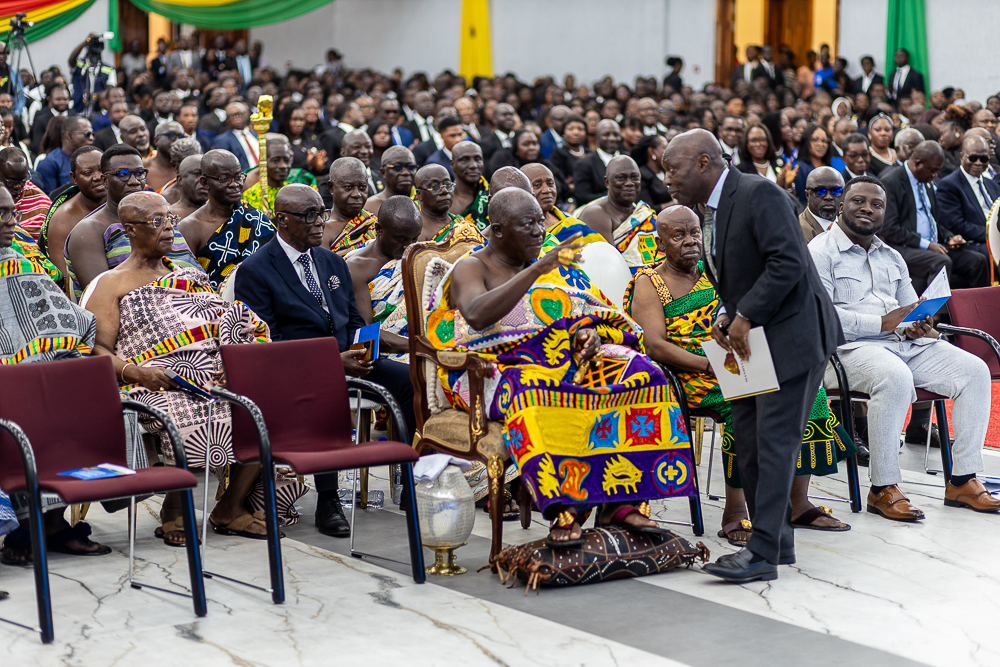
In what was an impressive remark the Asantehene, when presenting the report to President Akufo Addo, affirmed that nobody was above the laws of Ghana, including the protagonists of the strife in the North, and including himself. He added that by those same laws, whether understood in their traditional or modern sense, when his time comes and he departs, Asanteman will endure, because the customs and traditions that brought him to the Sika Dwa will be the same ones that will bring his successor.
This sacred obedience to law by kingship has been a platform for our common humanity. In a mightier precedent of over 800 years ago, it led to the almost divine gift to the world of the Magna Carta, one who’s ever moving spirit 163 years ago, led to Lincoln’s famous Gettysburg Address of “…. Our fathers brought forth on this continent, a new nation, conceived in liberty, and dedicated to the proposition that all men are created equal.”
This is immortal philosophy in law. Positions like those of the Asantehene and other traditional leaders should make the work of the Supreme Court a bit easier. In many other customs and traditions in Africa as well, we find that when traditional conflict resolution methods have been applied in collaboration with western legal training, they work better, or even if applied alone, they yield desired results.
I sometimes work in Rwanda on economic development—a country many people cite as a demonstrative model that governance systems can indeed work. In doing so, many commentators overlook one of its most profound contributions: the Gacaca Courts, based on an indigenous Rwandan concept focused on reconciliation and forgiveness, emphasizing voluntary acknowledgement of wrongdoing and restoration of relations.
Without that indigenous mechanism, and without the vision of leadership that guided it, Rwanda’s story might have been yet another chapter of prolonged tragedy.
Since you are here, of all places, you may be indulged in a little proverb:
Hu n’ ani so ma me nti na atwee mmienu nam
Antelopes walk in pairs so one may rescue the other in a time of danger or emergency.
In his 2025 Nobel Prize in Literature acceptance speech titled, Enough About Angels, the Hungarian novelist, László Krasznahorkai, sought to deepen the meaning of this centuries-old proverb in his European cultural context: cultivate friendship, maintain guiding relations rooted in old customs and traditions for angels he says, are difficult to find these days.
You cannot answer to all the affliction of illness as you cannot also claim credit for many of the progressive developments over the years but you can at least help to further build on those left in your bosom.
This, probably, is my only opportunity to speak to you with confidence (even with a touch of pomposity if it comes across as such) without contempt being imputed to me. And I pray that nothing in this life will compel me to stand before you when you sit upon your benches. I do not intend to come to you by any chance.
Happy celebrations!!