The Wallace Collection is famed for its Old Master paintings, French decorative arts, and arms and armour. Less well known, however, is a small group of gold regalia that is of profound spiritual, cultural and artistic importance to Asante, in present-day Ghana.
These objects were taken as part of an indemnity imposed on the Asante Kingdom by British forces during the Third Anglo-Asante War of 1873-74. They were sold to Garrard & Co., the Crown Jeweller in London, where they were acquired by collectors, including Sir Richard Wallace (1818-1890).
The gold regalia, which so captivated European audiences in the 19th century, were not only symbols of wealth and power, but also important marks of identity and belonging. They incorporate a rich cultural and spiritual vocabulary personified in human, animal and geometric forms influenced by Akan, Islamic and European designs.
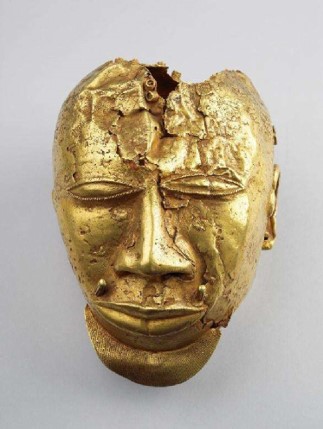
With a striking golden head as the centrepiece, one of the largest historic gold objects from Africa outside Egypt, this display will investigate the deeper cultural significance of these pieces and explore their duality as trophies of war and the soul of the Asante.
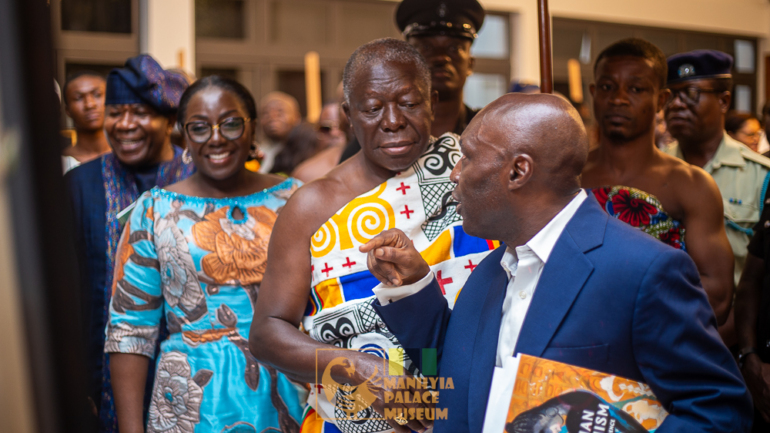
This display has been produced by the Wallace Collection in collaboration with the Manhyia Palace Museum in Kumasi, Ghana.
Curator of Decorative Arts and co-curator of the display, Alexander Collins, says: “This display invites us to look at the brilliance of these extraordinary gold regalia and to consider the lives, beliefs and histories they embody. While admired for their exceptional craftsmanship, these objects also bear witness to a painful history of colonial conflict and displacement. By presenting them within their full cultural context, we hope to encourage a deeper understanding not only of the complex journeys that brought them to the Wallace Collection, but also of their enduring significance to the Asante.”
Ivor Agyeman•Duah, Director of the Manhyia Palace Museum, says: “These are pre-19th-century West African ancestral creations, demonstrating gold’s malleability and everlasting value. Such a major public showing a century and a half after being taken speaks to their endurance, while asking necessary questions about their absence from their original home. Their nature is clear: they are signposts of a civilisation. The display with the Wallace Collection is therefore not only a memorial incarnate of the Third Anglo-Asante War of 1873-1874, but a sign of the survival of these sacred objects in the present.”
Dr Xavier Bray, Director of the Wallace Collection, says: “This display has been shaped in collaboration with the Manhyia Palace Museum, placing the histories and perspectives of the Asante people at the centre of how these objects are understood. In combination with our own historical accounts and research, the display brings a renewed focus to these incredible objects. “